Showing posts with label oral fluid drug tests. Show all posts

Wednesday, May 27, 2009

Prescription Drug Abuse Dealths - Second leading cause of accidental deaths in America

If you don't believe that prescription drug abuse, especially pain relievers is a health and safety threat, read on.


May 27, 2009 - New drug czar wants states to monitor prescription abuse

More Americans die from drugs than from gunshot wounds.


Drug czar Gil Kerlikowske says one of his top priorities is curtailing abuse of prescription drugs such as the addictive painkiller OxyContin that are readily available in the United States.

"We get overly concerned about drugs coming in, but the pharmaceuticals are here already," - Gil Kerlikowske - White House


Kerlikowske said he'll push for more states to adopt prescription-monitoring programs in which doctors and pharmacists log prescriptions for addictive drugs so law enforcement can track them.

Kerlikowske, a former Seattle police chief who became director of the White House Office of National Drug Control Policy on May 7, said drug abuse is a "public health problem."


"Legalization isn't in the president's vocabulary, and it certainly isn't in mine," he told 300 law enforcement officials last week in Nashville.

Saturday, April 11, 2009

Drug Abuse Rising, While Alcohol Use Declines


SAMHSA and the White House improperly use statistics to show a decline in substance abuse, electing to point to lower "positive" rates as determined from urine-based drug testing. This defies logic, as most people are aware that prescription drug abuse is at an all time high, and a component of a worldwide problem.


In reality, drug abusers easily "cheat" urine based testing, and most urine drug tests do not target prescription drug abuse such as oxycodone, hydrocodone, and benzodiazepines.

On the other hand, treatments episode data show a different story. The number of people seeking treatment for drug abuse continues to rise, while those seeking treatment for alcohol misuse is declining.

Wednesday, June 25, 2008

New Specimen Validity Ruling Ineffective


The recent "final rule" for urine-based "Specimen Validity Testing" (outlined below) is clearly of limited value, as it does little to address the prevalent practice of drug abusers cheatig urine tests.

Observed collection is the only method to assure specimen validity.

The ODAPC / DOT / & SAMHSA must stop their "political crumbling" to private interest groups such as large urine laboratories and accept alternative specimen types - oral fluid, hair - where observed specimen collection is the norm.

While the General Workplace can develop effective drug free workplace programs, those subject to Federal Mandated Drug Testing clearly can not.


Summary of Final Rule for Specimen Validity Testing

Published in today’s Federal Register is a Department of Transportation Final Rule:


Procedures for Transportation Workplace Drug and Alcohol Testing Programs


In summary:


1. This Final Rule makes it mandatory for laboratories to test all DOT specimens for specimen validity (i.e., adulterants and urine substitutes) and for laboratories to follow all Department of Health and Human Resources (HHS) protocols for doing so.


2. Observed collections will afford less privacy in order to guard against employee use of items designed specifically to beat the testing process.


a. Directly observed collections will continue to occur only when there is a specific reason to believe that an employee may be attempting, or have sufficient reason, to evade the testing process.


b. Items such as prosthetic devices designed to carry clean urine will be checked for by observers with both male and female donors. The observer will have the employee raise and lower clothing, and then put it back into place for the observed collection.


c. Observed collections will now be required, rather than optional, for all return-to-duty and follow-up drug testing.


3. In an effort to thwart those who would manufacturer products designed to adulterate specimens, the Final Rule will no longer have easy-to-follow tables and charts outlining the adulterants for which laboratories are testing and the scientific cutoff levels at which laboratories are testing them.


4. Definitions in the Final Rule have been changed to harmonize with the HHS.


5. During an invalid result Medical Review Officer (MRO) review, an employee admission of adulterating or substituting a specimen is now a refusal to test.


6. Pursuant to MRO requests, the Final Rule will close the potentially endless loop on invalid specimen results; and employees requiring negative results [for example, pre-employment tests], when they have medical reasons for providing invalid results, will be able to obtain them through medical evaluations to rule out signs and symptoms of drug use.


7. The Final Rule will also streamline and simplify the potential myriad of complicated laboratory-confirmed and MRO-verified drug test results.


8. The Final Rule requires drug testing laboratories to report to DOT semi-annual statistical summaries on all of their DOT testing.


9. The Final Rule effective date is August 25, 2008.

Thursday, May 1, 2008

Drug Abuse in Construction & The Role of Union Leadership


"A construction work site is no place for an alcohol- or drug-impaired worker," says LI UNA General President Terence M. O'Sullivan. "To limit this risk and, also, to ensure that workers who need help get it, the Laborers support efforts to establish comprehensive drug-free workplace programs in the construction industry."


Abstract

Union stewards, general members, & senior management benefit from training on the many manifestations of substance misuse in the workplace, and their impact on working people and their children, contractors, insurers, and owners. Avitar's novel approach to workplace substance abuse management can assist in providing a framework of knowledge as well as implementation monitoring tools.

Joint development of the training curriculum, drug policy, and testing programs, would, however, require the direct involvement of union management. While Avitar can supply the technical components, to gain organization-wide commitment requires high level of participation and support of union leadership. Arguably, this leadership has been lacking in specific cases.

Unions would benefit by working with contractors, owners, insurers, and innovative drug-free workplace service providers to establish comprehensive drug-free workplace policies that include an education component to demonstrate their commitment to a drug-free workplace, support random testing via observed specimen collection, and provide employee assistance programs.

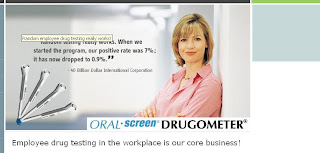
Random testing via oral is convenient, effective, non-invasive, and targets "on-the-job" drug misuse. Unlike traditional urine-based testing, oral fluid testing;

1. deters substance misuse
2. reduces accidents, workers comp claims and,
2. improves workforce image and quality.


While Construction Union may be aware of the unresolved, and epidemic problem of substance abuse in the construction sector, they may not be aware that a solution exists and the importance of their playing a leading role in mitigating the issue.

Substance abuse diminishes the ability of unions to build membership and mobilize current members.
- It erodes self-esteem and autonomy and undermines union participation, power, and leadership.
- It damages the solidarity of the union community and weakens its ability to withstand employer "attacks".

1. Unfortunately many contractors, owners, and insurers view unions as an impediment to resolution of the substance abuse in the construction sector. The lack of a comprehensive and effective occupational drug-free workplace approach by Unions contributes ineffective, ad-hoc industry practices. Similarly, the AFL-CIO program requiring urine testing and specific vendors, even further delays positive, pro-active change.

2. Unions must be proactive in efforts to deter the abuse of controlled substances and alcohol on construction sites. Laborers, management, and all related constituencies would benefit by developing and negotiating a drug and alcohol testing template programs for all contractors / owners / insurers.

3. A comprehensive drug-free workplace program MUST include:
random drug testing (via observed collection - traditional urine-based testing is relatively ineffective),
education, and
assistance.


Measurement is crucial to the recognition, treatment, and prevention of substance abuse related occupational injuries, and other negative impacts. Deterrence and identification of substance abuse benefits the individuals, their immediate coworkers, workers throughout the industry, and others exposed to the negative impacts of substance misuse. (insurers, owners, contractors, public).


4. What union members do away from work is a private affair as long as they aren't impaired when reporting to work, however, traditional urine drug testing is contrary to this notion. Neither unions nor employers should not be allowed to dictate behaviors while away from work.


5. Deterrence is the goal, however, detection and assitance are true benefits.
Union MAP's (member assistance programs) are underutilized (not used 60% of the time). MAPs serve members as well as health & MMwelfare funds, contractors, owners, alike.
- MAPs help laborers & families access to assistance most needed for personal problems/issues
- MAPs control costs (lack of care created costs far exceeding MAP cost).
Labor organizations can only offer assistance to their members on a variety of health, welfare, and safety issues, including substance use disorders, only if aware of the problem.


Sources and Additional Information:

1. 50% of abuse detected now involves prescription drugs, esp. pain relievers. The abuse / misuse of many popular prescription pain releivers is not tested via traditional DOT-based urine testing.

2. While approximately 15%- 20% of construction workers abuse drugs, the US Bureau of Labor Statistics survey significantly underestimate the incidence of work related injuries and illnesses. The United States does not have a comprehensive national surveillance system for occupational injuries and illnesses. Lacking this system, major sources of US occupational health data include the Bureau of Labor Statistics (BLS) annual survey of occupational injuries and illnesses, workers' compensation records, and physician reporting systems. Data produced by these systems have been described as fragmentary, unreliable, and inconsistent. Moreover, they have been shown to underestimate the incidence of workrelated injuries, illnesses, and even fatalities by as much as several hundred percent. (Occupational injury and illness surveillance: Conceptual filters explain underreporting; Azaroff, Lenore S; Levenstein, Charles; Wegman, David H American Journal of Public Health 09-01-2002 )

3. 77% of adults with substance abuse disorders are employed - Results From the 2004 National Survey on Drug Use and Health: National Findings. DHHS Publication No. (SMA) 05-4062. Rockville, MD: U.S. Department of Health and Human Services, Substance Abuse and Mental Health Services Administration, Office of Applied Studies, September 2005, p. 72.

4. LIUNA MAPs save money - Detroit, first-quarter 2003 data indicate that the LAP saves the fund about $175,000 annually over the likely cost of service to members if no MAP existed. In Southern Illinois, drug expenditures for the first two quarters since MAP usage was mandated are running more than 50 percent below the previous year's average. In Massachusetts, since the MAP was established in 1991, the Fund has saved about $8.8 million in average length of service and per diem costs for in-patient care.

5. Substance use disorders affect people from all walks of life, workers & families. According to a 2005 Hazelden Foundation survey, more than 69 percent of employed people indicated that if a family member were struggling with abuse or addiction, it would negatively affect their ability to concentrate and be productive at work. In fact, 36 percent of people who are employed admitted that at least one of their coworkers had been distracted, less productive, or missed work because of alcohol/drug abuse or addiction within their family.

6. A key message for labor organizations to communicate to employers is that treatment for substance use disorders has substantial benefits for businesses. Reported job problems, including incomplete work, absenteeism, tardiness, work-related injuries, mistakes, and disagreements with supervisors, are cut by an average of 75 percent among employees who have received treatment for substance use disorders. Furthermore, treatment has a benefit-to-cost ratio of 7:1, with substance use disorder treatment costing $1,583 on average and having a monetary benefit to society of nearly $11,487.

7. Domestic violence is directly related to substance abuse. Despite the obvious importance of involving unions in domestic violence prevention with men, little works has been done is this area. This may reflect fears that unions would not be receptive to addressing domestic violence. Senior office holders within some unions have been hesitant to apply their leadership to this issue, for various reasons. Sometimes union leadership has not understood how widespread domestic violence is. Sometimes they have argued that it is a private matter best left to the couple affected. At other times they have expressed concern but felt pessimistic about their ability to do anything about it. And on other occasions they have felt torn between their desire to protect a worker from disciplinary action or job loss and their conviction that domestic violence is wrong.

- It is every employer's legal responsibility to ensure safety in the workplace. Domestic violence compromises the well-being, job performance, and productivity of valuable employees. Many of the attitudes and gender roles that increase men's risk of using domestic violence also predispose men to other high risk behaviors, such as drug and alcohol abuse, workplace violence, or taking unnecessary safety risks to demonstrate "toughness" to peers.
- Domestic violence is a leading cause of workplace violence; it also creates safety and health risks to everyone in the workplace:
- Since almost one in four women is affected by domestic violence, we can make a conservative estimate that 10% of employees may be affected by domestic violence.
- 24% of abused women said they were either late or missed days of work due to abuse
- 54% of abused women missed up to three full days of work per month.
- 94% of corporate security directors surveyed rank domestic violence as a high security problem at their company.
- Violence against women weakens unions and diminishes their ability to build membership or mobilize current members.
- Domestic violence is a safety and health issue for all members since perpetrators often stalk and harass women at their workplace, possibly jeopardizing co-workers as well. Additionally, domestic violence is a work/family issue, since it has devastating economic and personal consequences for the family.

8. Most union members are in support of drug testing (Discriminating characteristics of union members' attitudes toward drug testing in the workplace, Journal of Labor Research, 2007.)
Thursday, April 24, 2008

Drugged Driving and Alcohol DUI Leading Cause of Deaths


2008 SAMHSA REPORT - United Stated Department of Heatlh and Human Services

5% of people drove under the influence of illicit drugs in the past year (10 million drivers)
(15% under influence of alcohol).

States with the highest drugged driving rates:
District of Columbia (7.0 percent),
Rhode Island (6.8 percent),
Massachusetts (6.4 percent),
Montana (6.3 percent), and
Wyoming (6.2 percent).

Impaired driving is the LEADING CAUSE OF DEATHS among persons aged 3 to 33.


Illicit drugs, as defined above, includes marijuana/hashish, cocaine (including crack), inhalants, hallucinogens, heroin, or prescription-type drugs used nonmedically.

Friday, March 28, 2008

SAMHSA TO APPROVE ORAL FLUID / SALIVA DRUG TESTING

(source: Forensic Sci Int. 2007 Apr 12)

Despite the lack of speed, likely due program mismangement and lobbying on the part of urine labs and large TPAs that have a vested interest in urine testing, SAMHSA will (per the below) have to approve alternative forms of drug testing in order to manage workplace drug abuse.


The U.S. Mandatory Guidelines for Federal Workplace Drug Testing Programs: Current status and future considerations.
Donna M Bush - Division of Workplace Programs, Substance Abuse and Mental Health Services Administration, U.S. Department of Health and Human Services, One Choke Cherry Road, Room 2-1033, Rockville, MD 20857, USA.

The U.S. Department of Health and Human Services (HHS) drug testing standards were published in 1988 and revised in 1994, 1998, and 2004.

In a separate notice, HHS proposed to establish scientific and technical guidelines for the Federal Workplace Drug Testing Program to:

(1) permit laboratory testing of hair, oral fluid, and sweat patch specimens in addition to urine specimens for marijuana, cocaine, phencyclidine, opiates (with focus on heroin), and amphetamines [including methylenedioxymethamphetamine (MDMA), methylenedioxyethamphetamine (MDEA), methylenedioxyamphetamine (MDA)];

(2) permit use of on-site point of collection test (POCT) devices to test urine and oral fluid at collection sites;

(3) permit use of instrumented initial test (screening only) facilities [IITF] to quickly identify negative specimens; and (

4) add training requirement for collectors, on-site testers, and MROs.

This proposal was published in the Federal Register on 13 April 2004, with a 90-day public comment period.

The Substance Abuse and Mental Health Services Administration, HHS, reviewed those comments and is preparing the Final Notice that will define the requirements for such testing, including: specimen collection procedures, custody and control procedures that ensure donor specimen identity and integrity, testing facility, initial and confirmatory test cutoff concentrations, analytical testing methods, result review and reporting, evaluation of alternative medical explanations for presence of drug or metabolite in the donor's specimen, and laboratory certification issues.

Voluntary pilot performance testing (PT) programs for each specimen type are on-going since April 2000 to determine how to prepare PT materials for specimens other than urine to evaluate laboratories' ability to routinely achieve accuracy and precision required.


Certification programs will be developed using the current urine drug testing National Laboratory Certification Program model.

The addition of accurate and reliable workplace drug testing using hair, oral fluid, and sweat patch specimens will complement urine drug testing, and aid in combating industries devoted to suborning drug testing through adulteration, substitution, and dilution.

Tuesday, March 25, 2008

Saliva / Oral Fluid Proteins Mapped

Protein map of human spit created
By Julie Steenhuysen 27 minutes ago

CHICAGO (Reuters) - U.S. researchers have identified all 1,116 unique proteins found in human saliva glands, a discovery they said on Tuesday could usher in a wave of convenient, spit-based diagnostic tests that could be done without the need for a single drop of blood.

As many as 20 percent of the proteins that are found in saliva are also found in blood, said Fred Hagan, a researcher at the University of Rochester Medical Center in New York who worked on the study.

"This is potentially a large field that has many clinical implications in the area of disease diagnostics," said Hagan, whose work was published in the Journal of Proteome Research.

The researchers hope saliva-based tests could be used to diagnose cancer, heart disease, diabetes and a number of other conditions.

"To be able to diagnose disease using saliva, you really have to have a comprehensive understanding of the saliva proteome," Hagan said in a telephone interview.

Like a genome, which lists all of the genes in an organism, a proteome is a complete map of proteins. While genes provide the instruction manual, proteins carry out the instructions by regulating cellular processes.

Researchers from five universities -- the University of Rochester, The Scripps Research Institute, the University of Southern California, The University of California San Francisco and the University of California Los Angeles -- sought to determine the complete set of proteins secreted by the major salivary glands.

BLOOD, SPIT AND TEARS

They collected saliva from 23 healthy men and women of several races. They tested saliva samples using some form of mass spectrometry, which determines the identity of proteins based on measurements of their mass and charge.

They compared their findings with recent protein maps of human blood and tears.

Early analysis has already turned up a number of proteins with known roles in Alzheimer's, Huntington's and Parkinson's diseases; breast, colorectal and pancreatic cancer and diabetes.

Most of the proteins were part of signaling pathways, which are key to the body's response to system wide diseases.

Hagan said the work should accelerate the development of new tools for tracking disease throughout the body.

Already there are saliva-based antibody tests to detect human immunodeficiency virus, or HIV, and hepatitis infections, Hagan said. He said this protein map will provide new targets.

"Monitoring disease as well as drug use could be more easily done with saliva as opposed to blood or urine," he said.

Other groups are working on a saliva-based test for breast cancer that would detect a protein fragment from the HER2 protein. Hagan said such tests could eventually replace uncomfortable and costly mammograms.

"We envision in the future spitting in a tube and looking for a marker like this breast cancer marker. It would be much easier to do, potentially at home," he said.

"Given that we've made this information publicly available, we fully expect a number of research groups will be picking their favorite targets and developing their own tests. That is the intent -- to create a wealth of data to stimulate more research and increase the chances of producing better diagnostic tests," Hagan said.

(Editing by Maggie Fox and Mohammad Zargham)

Wednesday, February 27, 2008

Random Student Drug Testing

Drug education programs and parental advice often aren’t as strong as peer pressure.

Studies show in the last year more than one in three high school seniors used illicit drugs.

Scott County Superintendent, Dr. Dallas Blankenship -
“We think that if we have a drug testing program it will help students to explain to their peers that they are not going to do drugs.”Somerset High School began randomly drug testing students involved in “privileged activities”, like sports and cheerleading last fall. Their principal, Jeff Perkins, calls it “one of the best things I think we’ve done.”

The Program
Both students and parents are required to sign drug testing consent forms in order to participate in privileged activities. Curricular or academic based activities like band, debate and choir are not currently tested, even though they too are competitive extracurricular activities.Students be tested are randomly selected and the process takes about five minutes per student. The test looks for the presence of drugs like marijuana, meth and ecstasy as well as prescription drugs such as oxycodone and hydrocodone. If a test is non-negative, a second test is sent to a laboratory for additional testing. If the confirmatory test is positive, the student receives counseling and may have to perform certain tasks such as writing a paper and performing community service. The student is also suspended from participating in the privileged activity for a short period of time.

The Intent
Overall the random drug testing program is designed to be preventative and not punitive. It’s also designed to give kids who do test positive a second chance.“We’re getting on the other side of this now, some education and getting these kids in some type of rehabilitation program. And hopefully we can salvage that versus the other way which was throwing them away.”“The safety of students and to have a drug free environment are extremely important, so our board’s already made a commitment.”

Original Source: Chris Dietz, ABC News

Drug Testing in Schools

School Drug Testing

Bethlehem Schools Adopt Drug Testing PolicyAnyone looking to work in the Bethlehem Area School District will now have to take a drug test.Monday night, the school board voted to approve a pre-employment drug testing policy.

Starting immediately, new and prospective employees will have to get tested before they can work.

The policy was proposed after Nitschmann Middle School principal John Acerra was arrested on drug charges.

Loretta Leeson: "A drug test doesn't always screen everything but I think we're taking the right steps to at least protecting the children in the district and other employees in the district."One board member has requested looking into testing all employees.

Source: http://wfmz.com/view/?id=228306

Friday, January 18, 2008

Accuracy of On-site Oral Fluid / Saliva Drug Testing


Journal of Psychoactive Drugs


A comparison between instant and laboratory oral fluid analysis among arrestees.
Yacoubian GS; Wish ED.


Research studies that collect biological measures of drug use have traditionally utilized laboratory urinalysis.


Several recent studies have also documented the utility of laboratory oral fluid (OF) analysis.
A new method of drug testing -- instant OF technology -- may offer a quicker, equally accurate alternative to laboratory OF assays.

To date, however, no field studies have compared the two methods.


In the current study, an instant OF test (Avitar ORALscreen (TM)) was administered to adult arrestees surveyed through Maryland's Substance Abuse Need for Treatment among Arrestees (SANTA) study.

Following a research interview, a second OF sample was collected (Avitar ORALconfirm (TM)) and shipped to the manufacturer's laboratory for analysis.

The Avtiar ORALscreen instant OF test was -


96% sensitive and 83% specific for cocaine,

100% sensitive and 75% specific for opiates, and
100% sensitive and 94% specific for marijuana.

Copyright 2006, Haight-Ashbury Publishing


Reference Source: Yacoubian GS; Wish ED. A comparison between instant and laboratory oral fluid analysis among arrestees. Journal of Psychoactive Drugs 38(2): 207-210, 2006. (10 refs.)

Monday, January 7, 2008

Drugged Driving

Drivers is Australia who tested positive to drugs in roadside checks have had their results confirmed in a laboratory and will be charged.

Police had to wait until Queensland Health Scientific Services analysed the drivers' saliva samples in its laboratory and confirmed the presence of drugs before they could be charged.
All 10 drivers tested positive to driving while under the influence of methamphetamine.

A 42-year-old man has been summonsed to appear in Brisbane Magistrates Court on January 31 and a 25-year-old man will appear in the same court on February 11.

Since random drug-testing of drivers was introduced on December 1, 19 drivers have tested positive to drugs, up until midnight on Thursday.

Police are still awaiting laboratory confirmation of the remaining nine test results.

Of the 19 drivers, 17 tested positive to methamphetamine, one tested positive to both methamphetamine and cannabis and one tested positive for ecstasy.

Drug-drivers can be fined up to $1050, lose their licence or face up to three months' jail.
Police hope to saliva-test about 20,000 drivers in the first year of the random roadside drug-testing operations and expect about 300 to test positive to illicit drugs.

The introduction of drug testing comes as Queensland cut its road toll by more than two-thirds for the official holiday period, with four deaths against last year's 13.
Across Australia, 45 people died on the roads this season compared with 62 last year.